Spam Labels
Mobile carriers such as AT&T, Verizon, and T-Mobile use their own independent analytics systems to determine whether an incoming call should be labeled as “Spam Likely,” “Spam Risk,” “Potential Spam,” or “Scam Likely.” These labels are not assigned by Flagman Telecom, nor can we directly remove them.
Important: All spam labeling decisions are made by mobile carriers and their analytics partners. Flagman Telecom cannot override or force changes to these labels on end-user devices.
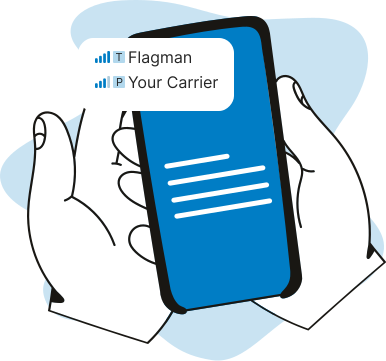
Flagman Telecom Is Not Responsible for Spam Labels
Spam markings are controlled entirely by mobile carriers and their analytical partners. Flagman Telecom does not:
- Generate spam classifications
- Control carrier spam databases
- Influence third-party reputation scoring
- Manage mobile carrier caller ID displays
- Override spam labels assigned by carriers
How Mobile Carriers Determine “Spam Likely” Labels
Major carriers use third-party analytics engines to score and classify calls:
| Carrier | Analytics Provider |
|---|---|
| AT&T | Hiya |
| T-Mobile | First Orion |
| Verizon | Verizon voice spam feedback |
| TNS | TNS / Call Guardian |
Major carriers use third-party analytics engines to score and classify calls:
- Call volume patterns and frequency
- Answer and rejection rates
- Short-duration calls (e.g., 5–10 seconds)
- Historical reputation and previous ownership of numbers
- Call behavior across networks
- User complaints, spam reports, and industry trends
If their algorithms detect activity that resembles spam, even unintentionally, a number may be flagged as potential spam.
Why Carriers Are Allowed to Label Calls as Spam
This practice is legal and approved by the Federal Communications Commission (FCC). Under current FCC rules, carriers may:
- Label suspected spam or scam calls
- Block high-risk traffic
- Use analytics to identify potential fraud
- Take proactive steps to protect consumers
Official FCC Resources
- FCC – Call Blocking Tools: https://www.fcc.gov/call-blocking
- FCC Declaratory Ruling on robocall blocking and analytics: https://www.fcc.gov/document/fcc-affirms-robocall-blocking-clarifies-transparency-rules
Common Reasons a Legitimate Number Gets Flagged
- High call volume during short time intervals
- Large numbers of unanswered or rejected calls
- Very short calls (5–10 seconds)
- Dialing many different numbers or sequences
- Negative reputation from a previous owner of the number
- Low STIR/SHAKEN attestation from upstream carriers
- Users marking calls as spam in carrier apps
- Industry-wide spam patterns associated with similar ranges
How to Request Removal of an Incorrect Spam Label
Only mobile carriers (or their analytics partners) can remove or adjust the spam label for your number. You can request a manual review through the following official portals:
- Generate spam classifications
- Control carrier spam databases
- Influence third-party reputation scoring
- Manage mobile carrier caller ID displays
- Override spam labels assigned by carriers
T-Mobile / First Orion
Important: All spam labeling decisions are made by mobile carriers and their analytics partners. Flagman Telecom cannot override or force changes to these labels on end-user devices.
Additional Carrier Documentation
AT&T / Hiya
- AT&T Call Protect: https://www.att.com/features/call-protect.html
- Hiya Spam Protection: https://hiya.com/solutions/spam-protection/request
T-Mobile / First Orion
- T-Mobile Scam Shield: https://www.t-mobile.com/customers/scam-shield
- First Orion Spam Protection: https://www.firstorion.com/scam-protection/
Verizon / TNS
- TNS Call Guardian: https://www.trusttns.com/call-guardian
- Verizon Spam Calls Guide: https://www.verizon.com/about/news/spam-calls-guide
Key Takeaways
- Spam labels are not created or controlled by Flagman Telecom.
- Mobile carriers use their own analytics and third-party databases.
- The FCC permits carriers to label and block suspected spam calls.
- Only carriers and their analytics partners can remove spam labels.
- You can use the official links above to request a review of your number.